1. Growing MedTech Translation 2019: conference highlights

    Over 130 delegates from across the medtech sector joined us on Friday 6 December 2019 to learn more about the current innovation landscape in the Leeds and Sheffield City Regions at Growing MedTech Translation 2019.

    The packed agenda included three speakers from actively supported Grow MedTech projects, student pitches from recipients of Translate MedTech Summer Student Project Funding, and medtech pitches from six hopeful project teams who sought to impress a panel of independent innovation specialist ‘dragons’ for the chance to win £10,000 in innovation funding support.

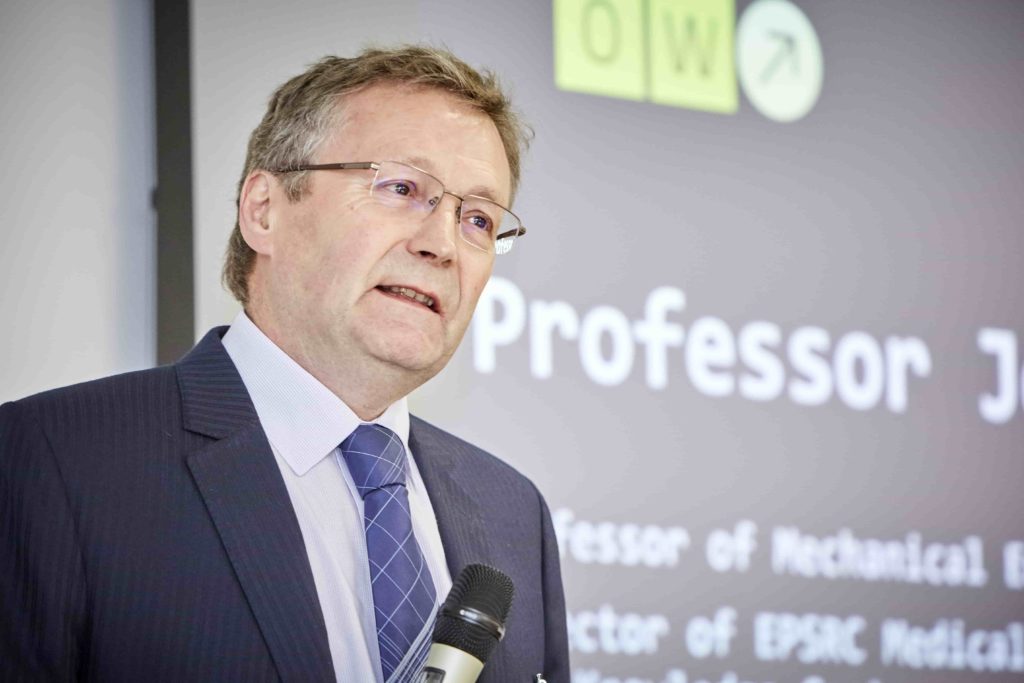
    Other key speakers included Prof John Fisher, who highlighted the need for medtech innovators to recognise that successful new innovative medical products that come to market over the next decade will be driven by technology convergence, and by patient and population needs.

    Prof John Fisher giving his opening talk at Growing MedTech Translation 2019
    Prof John Fisher giving his opening talk at Growing MedTech Translation 2019

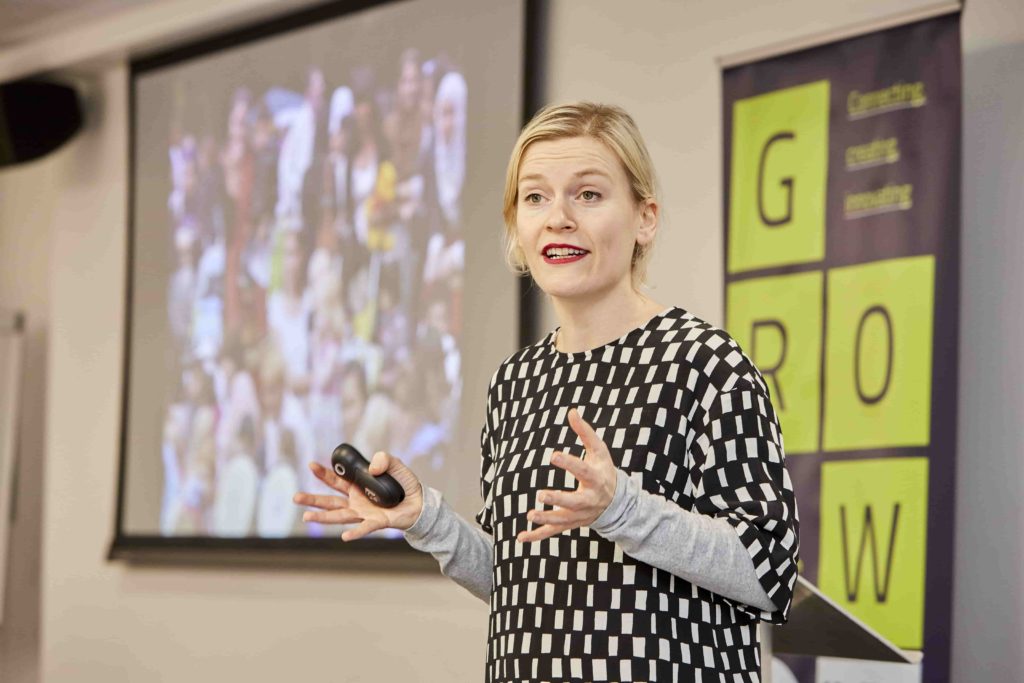
    Our keynote talk was given by Dr Rosie McEachan, director of Born in Bradford who spoke on the importance of end-user insights in developing impactful solutions to unmet healthcare needs.

    Dr Rosie McEachan, director of Born in Bradford, delivering her keynote speech at Growing MedTech Translation 2019
    Dr Rosie McEachan, director of Born in Bradford, delivering her keynote speech

    Presentations throughout the day were balanced by a long break for lunch and networking.

    Delegate networking taking place between presentations at Growing MedTech Translation 2019.
    Networking between presentations

    During this break, delegates had the opportunity to network with representatives from nine organisations at their exhibition stands and discuss regional opportunities that may be of interest.

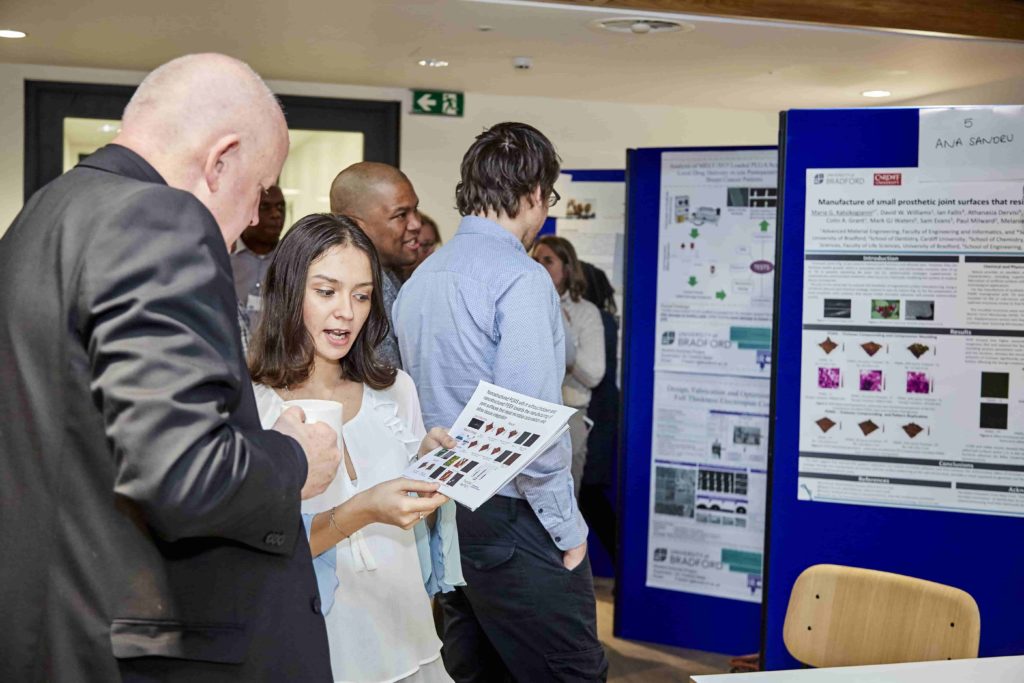
    Each student who gave a presentation about their Translate MedTech summer project also had the opportunity to present research posters to delegates to facilitate networking.

    Dr Will Bolton was awarded a £50 Amazon voucher after delegates voted that he presented the best pitch and poster of the day about his Translate MedTech Summer Student Project on developing circular frame fixators for leg fracture patients in developing countries.  

    Networking taking place around the Translate MedTech student project posters
    Delegate networking around the Translate MedTech student project posters

    Based on their use of Sli.do, a clear highlight of the conference for the entrepreneurially-minded was the Pump Prime Funding Competition pitches.

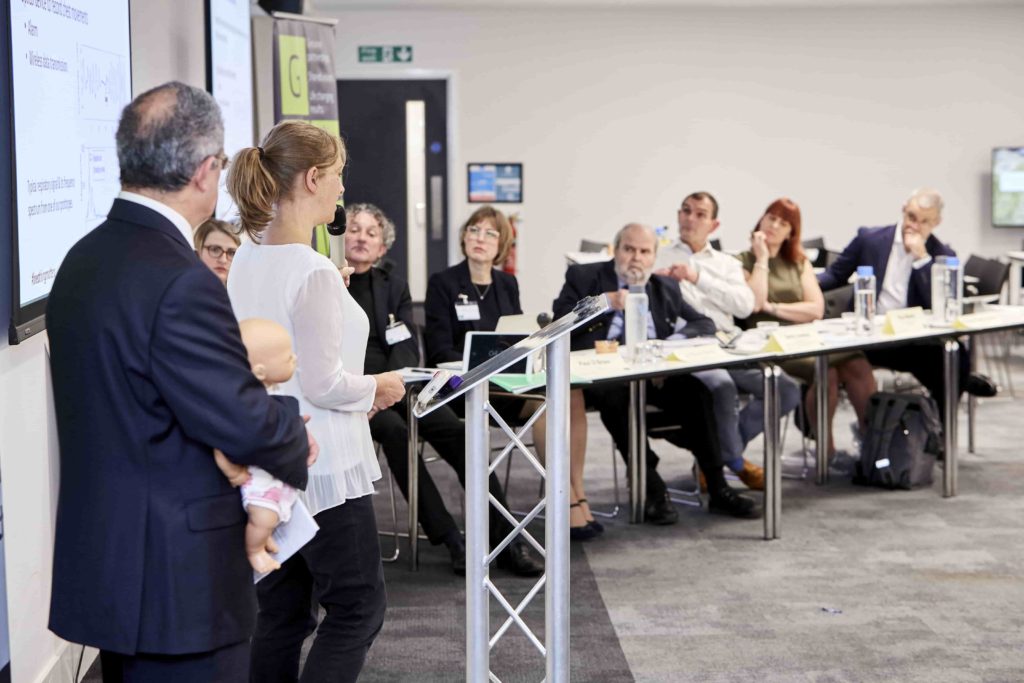
    Prof Reza Saatchi and Prof Heather Elphick presenting their medtech pitch to our panel of 'dragons' during the Pump Prime Funding Competition at Growing MedTech Translation 2019
    Prof Reza Saatchi and Prof Heather Elphick presenting their medtech pitch to our panel of ‘dragons’ during the Pump Prime Funding Competition.

    The audience submitted more than 80 questions to quiz the six hopeful contestants, with topics ranging from technology specifics, to questions around IP and business scalability.

    Following a lengthy discussion between the dragons and an audience vote, Prof Reza Saatchi and Heather Elphick were announced as winners of the Pump Prime Funding Competition, and the £10,000 innovation funding prize.

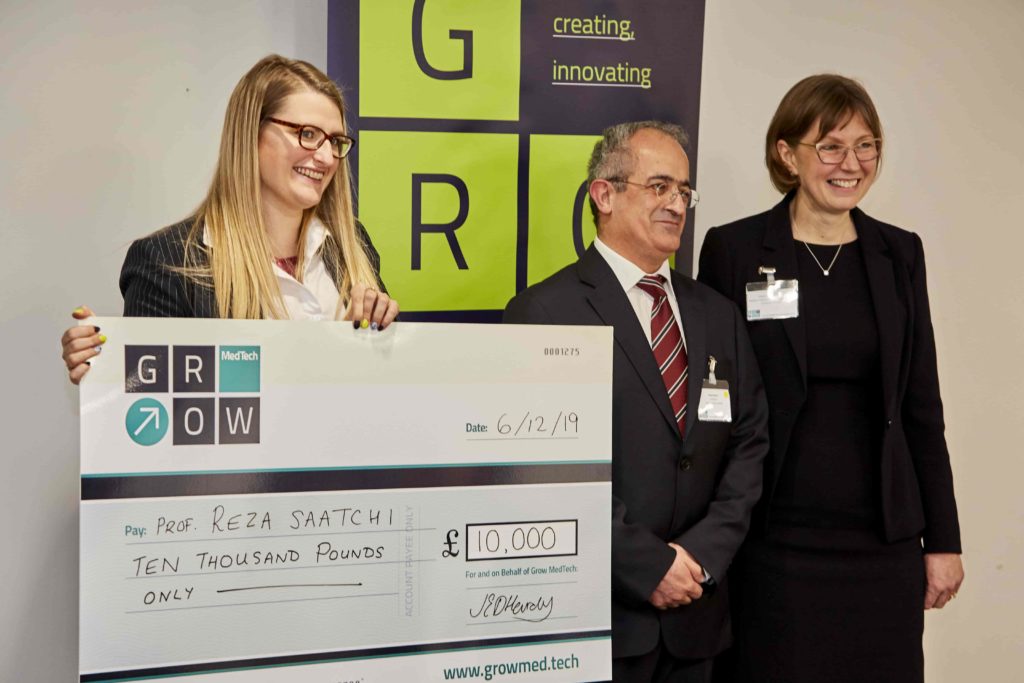
    A picture of Prof Reza Saatchi accepting the £10,000 prize for winning the Grow MedTech Pump Prime Funding Competition at Growing MedTech Translation 2019
    Prof Reza Saatchi being awarded his £10,000 prize for winning the Pump Prime Funding Competition

    Stay up to date with future Grow MedTech and Translate MedTech events by signing up for our mailing list.

  2. Breaking down barriers in medtech

    Kieran Perkins, Technology Innovation Manager at Grow MedTech, describes how we are supporting more and more digital healthcare technologies and combining digital with other technologies.

    Digital technologies are breaking down the walls of the medtech industry, enabling companies – and academics – that are new to medtech to apply their knowledge within the sector.

    This is true at all levels, from big players such as Apple (who recently appointed a senior cardiologist) and Google (who recently bought Fitbit) to the smaller companies and individual academics who are using their know-how to develop digital health technologies.

    Dr Steven Fenton from the University of Huddersfield, for example, is an electronic engineer with a research interest in audio quality in music production.

    Grow MedTech is supporting his project to create a 3D ‘audio map’ to help blind and visually impaired people navigate their surroundings.

    He is adapting software he developed for another purpose to translate a visual image into a sound picture and identify potential obstacles in the user’s path.

    Following the same pathway

    Although digital health products may seem very different to traditional medtech, the same criteria need to be applied to their commercialisation.

    Dr Fenton has received our earliest stage funding, to help him establish clinical need and market opportunity for the software and identify the best direction to take.

    The same questions need to be asked of this project as for any other – for example: does this technology meet a clinical need, is there a commercial opportunity for it, what competitors are already out there?

    But that’s not to say there aren’t new challenges and questions being raised by digital healthcare technologies, and these focus mainly on trust, transparency and data management.

    Will patients trust decisions made by software, rather than people? How clear can we be about how decisions or results are arrived at, when this is done by an algorithm? How will the data gathered be used, stored and managed – and who owns that data?

    The regulatory bodies are themselves still battling with many of these questions, though some changes are already in the pipeline.

    New EU regulations for medical devices (MDR) and in vitro diagnostic medical devices (IVDR) due to be introduced place more stringent requirements on the majority of digital technologies – essentially any that affect diagnostic or therapeutic decisions.

    This will result in a more onerous regulatory process which has caused some companies to revise their strategies.

    The challenge of AI in Health Tech

    The EU’s Ethical guidelines for trustworthy Artificial Intelligence (AI)’ set out factors which need to be continuously evaluated and addressed throughout the AI systems lifecycle and this will impact on all health technologies that use AI or machine learning.

    A key difference in a medical device that’s built on machine learning is that it’s not set in stone once developed.

    Unlike a more traditional device, an algorithm is intended to be dynamic and evolve over time which means it can keep improving and changing as it learns more from more data.

    We’re supporting a project at the University of Bradford using machine learning to assess the quality of donated organs for transplant.

    Assessing organ quality is complex, requiring multiple factors to be taken into account and some subjectivity can’t be avoided.

    As such, individual surgeons, teams and hospitals can come up with different assessments for the same organ. The surgeon conducting the transplant has to make the final call – a very difficult decision, particularly with organs of marginal quality.

    Professor Hassan Ugail is developing an algorithm that can score organs more objectively, by combining multiple data sets – including lab test results and patient survival rates – with a colour spectrum analysis that has been shown to relate to quality.

    The aim is to combine the expertise of multiple professionals into one assessment tool that grades the organ to give the transplant surgeon more confidence of success, so that no organ is unnecessarily rejected.

    The regulation for technologies such as this may still be uncertain, but at Grow MedTech we don’t let this block development in any way.

    Instead, we carry out horizon scanning, identifying the trends and ensuring projects put in place the elements they are likely to need for likely future regulation, to mitigate any risks.

    This usually means showing project teams have considered those key issues of trust, ethics, transparency and data management. These can be addressed by ensuring end user or patient involvement, or by bringing in specialist expertise.

    Combining expertise

    A project we’re supporting at Sheffield Hallam University, involves Dr Lynne Barker, who is working with a software development house with no previous experience of medtech.

    We’ve brought in a regulation specialist to work with the company, to ensure they fully audit and evidence the necessary steps during development to meet regulatory requirements.

    The technology is based on a test – in the form of a cooking exercise – to assess cognitive function in people with traumatic brain injury, stroke or mild cognitive impairment (the precursor to dementia).

    In trials, the test was able to distinguish between the three conditions. Patients with mild cognitive impairment didn’t complete the ‘meal’ on time, those with stroke usually forgot an ingredient whereas those with traumatic brain injury tended to undercook the food.

    The software company is now developing this into an app that can go into clinical trials.

    At Grow MedTech, we’re supporting more and more digital healthcare technologies or projects that combine digital with other technologies.

    These are often exciting projects to work with, as the speed of development can be much faster than traditional medtech. But however rapid the development itself is, there’s no substitute for properly assessing the potential for commercialising the technology.

    And this is where our help and support, for digital as for other technologies, can really make the difference.

  3. Dragons’ Den success for sleep apnoea experts from Sheffield Hallam University and Sheffield Children’s Hospital

    A team of academics and clinicians from Sheffield Hallam University (SHU) and Sheffield Children’s Hospital (SCH) triumphed in a Dragons’ Den-style pitch competition to win £10,000 of medical technology funding.

    The money will be used to advance the development of a device that utilises innovative method to monitor central sleep apnoea in young children and infants.


    Led by medical engineer Professor Reza Saatchi, the project team comprised of Professor Heather Elphick, Dr Ruth Kingshott and Dr Nicki Barker from SCH, alongside Dr Ruth Evans and Anthony Jones from SHU. 

    The team impressed Grow MedTech’s panel of independent dragons with their plans for technology that can help clinicians to monitor the respiratory condition in children and infants.

    Central sleep apnoea, which affects around 1% of all infants, is a type of breathing disorder that occurs during sleep and causes individuals to pause their breathing. These incidents can be serious enough to require hospital admission.

    Reza Saatchi, Professor of Electronics at SHU, said: “We are delighted to have won the prestigious Grow MedTech Pump Prime competition. There is currently a clinical need for a reliable and cost-effective device that allows home monitoring of infants and children with central sleep apnoea, and it is testament to the strength of our 15-year research and innovation partnership with Sheffield Children’s Hospital that we have succeeded in winning this highly competitive research prize which allows us to meet this important medical need.”

    The competition was part of Growing MedTech Translation 2019, a Leeds-based event hosted by Grow MedTech. The event brought together more than 100 delegates from the medtech sector to hear talks from innovators and to network.

    Alongside the dragons – made up of medtech experts and patient representatives – delegates at the conference were able to vote for their favourite research innovation, for which the SHU/SCH team also came out on top.

    The £10,000 Pump Prime funding and innovation support is to be used to de-risk and advance the development of the technology towards commercialisation and being used by patients. There are currently needs for a device that can be used to achieve accurate, reliable, easy to use, child-friendly and cost-effective home monitoring of central sleep apnoea.

    The SHU/SCH project focuses on the paediatric population, but the technology is equally applicable to adults and can reduce NHS costs by monitoring patients at home to allow more timely detection and treatment.

  4. We are hiring: Administrative Assistant

    This is an opportunity for an enthusiastic, efficient, creative and flexible administrative assistant to join the Medical Technologies Innovation team.

    The University of Leeds has significant capabilities that support the development of new medical technologies and these are united under a single gateway – Medical Technologies at the University of Leeds.

    Medical Technologies encompasses several major research and innovation programmes and projects: the Medical Technologies Innovation and Knowledge Centre, Translate MedTech and Grow MedTech hosted by the Institute of Medical and Biological Engineering at Leeds.  

    Grow MedTech, funded through Research England’s Connecting Capability fund, is a collaborative partnership between 6 Yorkshire universities (LeedsBradfordYorkHuddersfieldSheffield Hallam and Leeds Beckett) which aims to develop and share best practice in the translation and commercialisation of medical technologies.

    It brings together the best minds in engineering, biological development, design and manufacturing together with industry to drive medical technology products into everyday use to improve the quality of life for people across the world.

    You will be an experienced administrator with experience of arranging and servicing meetings and events, taking minutes, diary management, raising purchase orders and arranging travel. You will have a flexible, proactive approach and excellent communication skills.


    To explore the post further or for any queries you may have, please contact: 

    Dr Josephine Dixon-Hardy, Director of Medical Technologies Innovation

    Tel: +44 (0) 113 343 0920 or email: [email protected] 

  5. Grow MedTech annual report now available for download

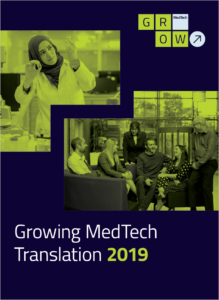
    Growing MedTech Translation 2019 - front cover image

    The 2019 Grow MedTech annual report is now available to download. Featuring 17 case studies ranging from artificial intelligence to health and medical engineering, the report demonstrates how Grow MedTech is supporting innovation in medical technologies in the Leeds and Sheffield City Regions.

    We’re extremely proud of the progress that we’ve made since our programme launch, but we know our work doesn’t stop here.

    If you are developing a medical technology and could benefit from our experties, funding or the combined capabilities of our six partner universities, contact one of our Technology Innovation Managers.

  6. Dr Rosie McEachan announced as keynote speaker at Growing MedTech Translation 2019

     Dr Rosie McEachan, Director of the Born in Bradford Research programme, is confirmed as the keynote speaker for Growing MedTech Translation 2019.

    Rosie is an applied Public Health Researcher, passionate about improving the health and wellbeing of communities. She works with a range of health, education, voluntary sector and local authority stakeholders to develop and evaluate innovative interventions to improve health and reduce inequalities.

    She has attracted over £45 million in research funding (with £9 million as Principal Investigator) from international research funders and published over 80 peer reviewed journals.

    About Born in Bradford

    Born in Bradford follows the health and wellbeing of over 40,000 Bradford residents to explore why some families stay health and why others fall ill. It is the cornerstone of Bradford’s unique role as ‘ City of Research’.

    Findings are used to develop new and practical ways to work with families and health professionals to improve the health and wellbeing of our communities.

    Their mission is simple: to conduct rigorous and applied health research that improves the health and wellbeing of families in Bradford and beyond.

    Their research falls into three key areas:

    • The Born in Bradford Study: this monitors the health and wellbeing of over 13,500 children, and their parents to review the ways that our genes, lifestyle, local environment and services we access come together to affect our health and well-being.
    • Better Start Bradford Innovation Hub: this study aims to recruit 5000 families living in selected areas of Bradford to see the impact of early life interventions on the health and wellbeing of mothers and children.
    • Catalyst for change: Using the findings from their studies, Born in Bradford have developed a range of additional research projects which are evaluating and developing new interventions to improve health.

    About Growing MedTech Translation 2019

    After a successful launch last year, Grow MedTech and Translate MedTech are back with a 2019 Annual Conference – a unique opportunity to learn more about current medtech being developed in the Leeds and Sheffield City Regions.

    The conference will bring together our vast community of academics, industrialists, clinicians, innovators and funders to enjoy lively, interactive presentations and networking.

    The event is currently sold out, but you can register for our waiting list to be notified if new tickets are released.

  7. Decision tool gets to the heart of the problem

    Patients making choices about healthcare treatments need to fully understand their options, but unfortunately this does not always happen as well as it should in clinical practice.   

    Grow MedTech is funding the development of a digital tool to help patients with heart disease to make more informed decisions about their treatment.

    The new device is based on funded research, led by Professor Felicity Astin from the University of Huddersfield. The research team studied the way the process by which patients opted for a treatment called coronary angioplasty happened and surveyed the views of patients and cardiologists at ten NHS Trusts in England.    

    Coronary angioplasty (CA) is one of the most common medical procedures worldwide and involves opening up partially blocked arteries in the heart. When this treatment is given to  people with stable heart disease unpleasant symptoms of angina can be relieved.

    Professor Astin discovered that these patients were often opting for this treatment without a clear understanding of the risks and benefits – often mistakenly believing it would reduce their risk of future heart attacks.

    Crucial funding

    The multidisciplinary team – working with the NIHR Devices for Dignity MedTech Cooperative – decided to develop a digital decision aid that could be used by patients and health professionals to work together to ensure that patients are making informed choices about CA.

    However, they struggled to find a funding source to cover the crucial gap between research findings and a prototype device – until they discovered Grow MedTech.

    “There’s limited funding around for establishing feasibility and creating a prototype,” says Dr Emma Harris, Research Fellow in Patient Education and Communication at the University of Huddersfield.

    “The support, contacts and commercial advice we’ve had from Grow MedTech has been fundamental in helping us to take the project forward.” 

    Using the Grow MedTech Proof of Feasibility award, the team set up a working group involving expert patients, doctors and nurses working in cardiology, academics with expertise in cardiology care and decision aid development) and Devices for Dignity with their technological expertise.

    They’ve run two workshops, one with patients who’ve undergone CA and the other with cardiology healthcare professionals, to get vital input on the content and working of the decision tool.

    A personal decision

    Based on this consultation, the team are now developing the content, while Devices for Dignity develop the software side. The tool is being designed to not only help patients understand the general risks and benefits of the treatment, but also what it might mean personally for them, in terms of their hobbies, future travel plans, medication side effects or lengths of hospital stay, for example.

    Once the prototype is ready, it will be tested with patients who’ve recently undergone a CA and with cardiologists and nurses. This will involve twenty participants across two NHS trusts, to help understand how the tool can be made flexible enough to fit into different healthcare pathways.

    “Involving end users, both the patients and the clinicians, in the design of the tool is a critical part of the project,” explains Dr Harris. “Ultimately this tool can help them both – ensuring clinicians are able to do their job well in terms of informed consent and that patients make the best decision for them personally.

    “It’s been really helpful to have Dr Luke Watson, our Grow MedTech Technology Innovation Manager, to go to for advice on the commercial side. He’s worked directly with Devices for Dignity on issues such as IP and copyright, freeing us up to do what we do best – the research and work with stakeholders.”

    Professor Astin agrees: ‘We want to ensure that the research has an impact on clinical practice to improve patient care and the Grow MedTech support is helping to make this happen.”

  8. Accelerating the pace of advanced material development

    Kieran Perkins, Technology Innovation Manager at Grow MedTech, investigates how advanced new materials are being applied to create novel medical devices at some of our partner universities.

    The pace of advanced material development is accelerating rapidly and nanotechnology, sophisticated computational modelling and material science are allowing us to design and modify materials that solve problems in radical ways. 

    These new materials are creating high value markets but it can take decades for these materials to turn into commercially successful products —and this needs to change.

    In 2013 the UK government included advanced materials as one of the “Eight Great Technologies” in which the UK is set to be a global leader.

    In the UK businesses that produce and process materials are essential to the UK economy. They employ over 2.6 million people, create 15% of GDP and generate sales in UK of £170bn pa.

    Grow MedTech’s approach is to harness these advances in new materials and apply them to create novel medical devices to meet unmet clinical needs. 

    By recognising the vast potential of advanced materials and the need to test markets and develop applications rapidly, we support teams to operate at speed to develop their technologies and de-risk the innovation for future investments.   

    The growing interest and excitement in advanced materials is also reflected in the decision of major research and innovation funders in both the UK and EU to target advanced materials within their portfolios. 

    This is especially true in medical, health and wellbeing research funding programmes. Examples include the importance of this research for smart-related health systems, bio sensors, optical sensors, micro and nanoelectronics and smart nano- and bio-materials.

    Narrowing the focus

    Advanced materials can have applications in several industries and so getting the right partnerships in place at the start is crucial to help researchers narrow the focus of projects towards the most distinct clinical applications.

    These decisions can be tough to make when the properties of a new material have many potential applications. 

    Grow MedTech supports teams to explore their technologies and ensures a robust commercial case can be made for new developments.

    At the University of Bradford, for example, a team led by Professor Anant Paradkar has developed a biocompatible liquid crystal material, called ‘Self-Gel’ which has several applications including, wound care, assisting surgery and imaging & sensing.

    Grow MedTech has supported Professor Paradkar in assessing the clinical need and commercial viability for several end applications. The next step is to direct the focus towards one particular product: developing the material as an injectable ‘cushion’. 

    This innovation will reduce the risk of perforation and haemorrhage during polypectomy procedures and so make the surgical procedure safer whilst offering the patient a faster overall procedure time.

    Overall, this will increase work flow within the NHS and support the NHS to meet the increased demand from an ageing population who are all looking for increased outpatient-type services. 

    “Support from Grow MedTech has also enabled us to build a strong strategic relationship with the NHS supply chain,” says Professor Paradkar. “We have recently signed a collaboration agreement with Huddersfield Pharmacy Specials (HPS) – a manufacturer owned by the NHS – and we will work with HPS to scale up this technology and industrialise for market”

    Tackling big healthcare questions

    Because advanced materials have properties and capabilities that have never before been seen in healthcare, they are providing ways to tackle extremely common, yet intractable problems that place a huge burden on patients, on healthcare systems and on the economy.

    One of the biggest of these is back pain. More than 10 million adults in the UK suffer from lower back pain (LBP) and it is the leading cause of disability in England, representing 11 per cent of the disability burden of all diseases and costing the economy some £10.7 billion each year in sickness days, work loss and care costs.

    At Sheffield Hallam University, Grow MedTech is supporting a team, led by Professor Christine Le Maitre and Professor Chris Sammon, to develop an injectable biomaterial that could replace a number of different current therapies.

    These include painkillers, physiotherapy, or invasive spinal fusion surgery – an operation used as a last resort and often with limited success.

    As with many other advanced materials projects, Grow MedTech has worked with the team to help narrow down the product development field.

    One product now in development, called Bgel, works to promote new bone formation, offering the possibility of safer and more effective spinal fusion without the need for metal implants and rods.

    A Grow MedTech Proof of Feasibility grant will enable the team to explore the use of Bgel in cows’ tails. These are an effective substitute for the human spine and will enable the team to carry out early-stage tests to see if a simple injection of Bgel can effectively fuse discs together.

    Exploring new directions

    Once a technology has been proven for its selected application, researchers will often explore further directions for development.

    A great example of where this approach has worked extremely successfully is at the University of Leeds, where acellular biological scaffolds are being developed to repair and replace human tissue.

    Called dCell®, the technology has been commercialised through Tissue Regenix and products for woundcare and cardiovascular applications have already reached the market. 

    New ways to apply these dCell techniques are continually being explored. Dr Jennifer Edwards, a post-doctoral research fellow in Leeds’ School of Biomedical Sciences, has been awarded Grow MedTech Proof of Feasibility funding to investigate ways to remove cells from donated adipose tissue.

    The aim is to produce an implantable product that surgeons can use in reconstructive surgery without triggering an immune response. Working in collaboration with NHS Blood and Transplant, Dr Edwards’ team is looking particularly at developing decellularized fat pads that can be used to treat diabetic foot ulcers.

    These kinds of approaches show the incremental improvements and developments that are possible following the invention of a new material.

    We don’t know, yet, what other applications will be discovered for dCell technology, but by helping bring together researchers from different disciplines  with relevant industry and clinical partners, we’ll be giving each great new idea the best possible launchpad.

  9. Grow Your Idea: Pump Prime Funding Competition

    Are you a researcher developing a medical technology at one of the Grow MedTech partner Universities? Could you benefit from pump prime funding and innovation support to derisk and advance the development of your technology towards commercialisation and clinical application?  

    Overview 

    Grow MedTech is inviting applications for up to £10,000 to support the development of a commercially inspired medical technology innovation, through our Pump Prime Funding Competition. 

    Successful shortlisted applicants will have the opportunity to pitch their proposal at the Grow MedTech Annual Conference on 6 December 2019 in a “Dragons’ Den” style session where a panel of experts, patient representatives and audience votes will decide which project is funded.  

    Eligibility 

    Grow MedTech supports the development of medical devices, materials and software but does not support the development and discovery of pharmaceuticals.  

    Applications are invited from researcher (post-doctoral to professorial level) led teams who are based at one of the six Grow MedTech partner universities: University of Bradford, University of Huddersfield, Leeds Beckett University, University of Leeds, Sheffield Hallam University and the University of York. If you are applying as a postdoctoral researcher you will need the approval and signature of your academic supervisor. 

    This call does not directly fund industry/commercial organisations. However, proposals from University partners which demonstrate evidence of an industry-defined market need and projects with industry partner contribution are encouraged.   

    This award is not intended to support basic research. 

    Eligible costs

    ✔ Research support/technical staff time (directly incurred staff costs) 

    ✔ Early stage prototype development 

    ✔ Consumables 

    ✔ Travel expenses if proportionate and key to the development of the technology 

    ✔ Regulatory pathway guidance 

    ✔ IP landscaping and advice on IP protection 

    ✔ Market, opportunity and competitor analysis 

    ✔ Developing technology road maps and routes to commercialisation 

    ✔ Patient, carer, and public consultation workshops to identify and validate the need for a project or technology 

    ✔ Clinical consultation workshops with clinicians and healthcare professionals to validate the need for a project or technology 

    Ineligible costs 

    ✖ Indirect or directly allocated staff costs (i.e. tenured academic staff) will not be funded 

    ✖ Costs relating to staff recruitment and relocation costs  

    ✖ Personal license fees and home office license  

    ✖ Funding to provide maintenance of equipment  

    ✖ Capital IT equipment and office stationery costs  

    ✖ Support for intellectual property protection, exploitation or freedom to operate reviews. 

    ✖ Grow MedTech will not directly fund industry/commercial organisations 

    Budget & project duration

    • Up to £10,000 
    • 6-month duration (projects must be completed by 31st December 2020) 

    How to apply and assessment process 

    Apply using the application form. Completed application forms should be emailed to [email protected] by 4pm Friday 11 Oct 2019 for shortlisting by the Grow MedTech Technology Innovation Management team.  

    Shortlisted applicants will be invited to pitch their proposal at the Grow MedTech Annual Conference on 6 December 2019 in a “Dragons’ Den” style session where a panel of experts, patient representatives and audience votes will decide which project is funded. 

    Expectations 

    Awardees will be expected to work closely with a Grow MedTech Technology Innovation Manager throughout the duration of their project including providing a detailed project plan, monthly updates and an end of project report. 

    You may also be required to present on the project at Grow MedTech events or as a written case study. 

    Important dates 

    • Competition opens: Monday 9 September 2019  
    • Submission deadline for application form: 4pm Fri 11 Oct 2019 
    • Shortlisting notification to applicants: by Friday 1 November 2019 
    • Submission deadline for pitch slides from shortlisted applicants: 4pm Monday 2 December 2019 
    • Pitching at Growing MedTech Translation Annual Conference: Friday 6 December 2019 
  10. A small grant provides substantial support

    Our Proof of Market (PoM) grants allow researchers to address crucial, early-stage commercial questions. Coupled with advice and support from our Technology Innovation Managers (TIMS), they enabled one team of researchers at the University of Bradford to take some important first steps.

    Professor Mohamed El-Tanani, in the University’s Institute of Cancer Therapeutics, is developing a blood test to determine the likelihood of breast cancer patients developing secondary tumours – known as metastasis – based on a biomarker discovered through his research. Simple, fast, low-cost and suitable for all breast cancer types, it would offer substantial advantages over the more expensive and complex genomic tests currently used by clinicians.

    Professor El-Tanani found that one of the first questions potential investors asked about the technology related to regulatory approval, questions he – and Dr Jason Jones Commercial Manager at the Faculty of Life Sciences – found difficult to answer. They applied for a Grow MedTech PoM grant to fill this gap.

    Specialist advice

    The funding covered the costs of a specialist consultant, who provided a detailed report on the regulatory challenges involved in taking a test like this to market. This included quality assurance of manufacture and putting the latest In-Vitro Diagnostic (IVD) regulations into plain English, to provide clear steps to regulatory approval.

    “We can now go into investor meetings with confidence and answer these key questions,” says Dr Jones. “To make a proposition like this attractive to investors, you need to show there can be low-cost market entry, with the infrastructure and quality procedures required kept as simple as possible.”

    Making connections

    Funding is only part of the support that the project has received from Grow MedTech. University of Bradford-based TIM, Kieran Perkins, has continually been on-hand to provide advice and useful contacts for the team. This has included an introduction to the National Institute for Health Research Leeds In Vitro Diagnostics Co-operative (NIHR Leeds MIC) and clinicians at Bradford Royal Infirmary.

    “An important part of the Grow MedTech approach is to make those connections with other areas of expertise or knowledge that are needed for translational work, but that may be unfamiliar to some academics,” says Kieran.

    Professor El-Tanani agrees: “Developing a clinical technology has to take into account the opinion of patients and the NIHR Leeds MIC will help us do this, as they have active PPI groups. They’re also going to work with us on the health economics aspects, so we can quantify cost savings of the test to the NHS.”

    The close working relationship between Kieran and the University’s commercialisation team has been as productive as the grant itself, welcome as the funding always is, according to Dr Jones:

    “The concept of having Grow MedTech people with specialist expertise based in each University has worked really well at Bradford,” he says. “Having Kieran on hand to answer questions, provide advice and review grant applications has been invaluable.”